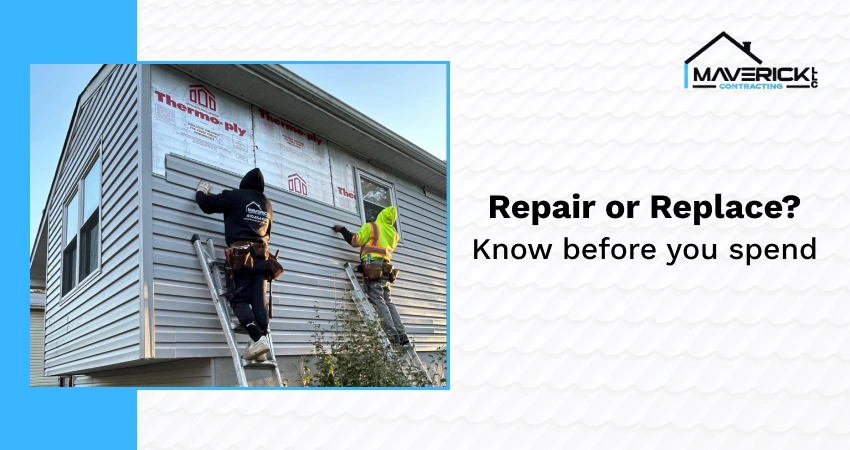
Your siding does more than make your home look good; it shields your walls from moisture, insulates against temperature fluctuations, and directly contributes to your property’s curb appeal and resale value. When it starts showing signs of wear, the question most homeowners face is the same: do you call a siding contractor for targeted repairs, or is it time to replace the whole thing? The answer depends on a handful of factors worth understanding before you decide either way.
What is siding repair?
Siding repair addresses specific, localized damage without touching the rest of the exterior. A qualified siding contractor will remove damaged panels, replace rotted or cracked sections, re-seal gaps, and match the new material as closely as possible to the existing surface.
Repair makes practical sense when the damage is limited in scope, such as a few warped boards after a harsh winter, impact damage from a fallen branch, or minor cracking around window trim. It costs significantly less than a full replacement and, when done correctly, can restore both function and appearance without disrupting the entire exterior.
The caveat is that siding repair works best when the underlying material is still structurally sound. If the damage you can see is just the surface expression of deeper moisture intrusion or substrate rot, patching over it will only delay the real problem.
When siding repair is the right call
There are clear situations where siding repair is the most cost-effective and sensible choice:
- Isolated damage covering less than 20-30% of the surface. If the affected area is limited to one or two walls, or a handful of panels, repair is almost always the more efficient option.
- Siding that is relatively new. If your existing siding was installed within the last 10 to 15 years and has been well maintained, replacing the entire system would mean discarding material with plenty of useful life remaining.
- Cosmetic issues only. Peeling paint, surface fading, or minor dents that haven’t compromised the integrity of the panel beneath are repair-level problems.
- Budget constraints in the short term. Siding repair allows homeowners to address urgent damage without committing to a project that can run tens of thousands of dollars.
One thing to always verify: color and texture matching. Older siding products may no longer be in production, making patched sections more visible against the original material. A skilled siding contractor can often work around this, but it’s a factor to raise before work begins.
What is siding replacement?
Siding replacement means removing the existing exterior cladding entirely, down to the sheathing, and installing a completely new system. This is a more involved project that requires careful planning around material selection, moisture barrier installation, trim integration, and finishing details.
Full siding replacement gives homeowners the opportunity to upgrade material types, change the home’s aesthetic, improve energy efficiency through better insulation, and start fresh with a uniform, warranty-backed exterior.
Siding installation at this scale is a significant investment, but the return is proportionally larger: better protection, improved thermal performance, and a home that looks updated and well-maintained.
When siding replacement makes more sense
Replacement is the right answer when repair would only treat symptoms rather than solve the actual problem.
- Widespread damage. If more than a third of your siding is failing, the cost gap between extensive repairs and full replacement narrows fast, and replacement gives you a clean, consistent result.
- Persistent moisture intrusion. Bubbling panels or soft spots that keep coming back mean moisture has already reached the substrate. New panels over rotted sheathing will fail just as quickly.
- Aging material. Vinyl lasts 20-40 years; fiber cement 50+ years; wood far less without upkeep. Once your siding is near or past that range, repeated siding repair becomes an expensive cycle.
- Rising energy bills. Older siding often lacks insulation backing. Installing new siding with insulated panels can bring your heating and cooling costs back down.
- Selling your home. Buyers notice siding immediately, and a full replacement consistently ranks among the highest-ROI home improvements before listing.
Siding repair vs. replacement: A direct comparison
The decision ultimately comes down to four variables: the extent of the damage, the age of the material, your budget, and your timeline.
Siding repair wins when the damage is minor, the material is young, and you need a fast, affordable fix. Siding replacement is the best option when the damage is extensive, the material is aging, or you want a long-term solution that eliminates the need for ongoing patchwork.
A useful rule of thumb: if the cumulative cost of needed repairs exceeds 50% of what replacement would cost, replacement is almost always the better financial decision. You get a new system with a warranty rather than an aging one held together by successive repairs.
How to choose the right siding contractor
Regardless of which path you take, the quality of the outcome depends heavily on who does the work. A few things to look for when hiring a siding contractor:
- Licensing and insurance. Verify that the contractor holds the appropriate state license and carries both general liability and workers’ compensation insurance.
- Material knowledge. Siding installation varies significantly across vinyl, fiber cement, wood, engineered wood, and metal. Make sure your contractor has documented experience with the material you’re working with or upgrading to.
- Transparency on scope. Be wary of contractors who quote before fully inspecting the substrate and sheathing. The visible damage is often only part of the picture.
- Written estimates. Any reputable siding contractor should provide a detailed written estimate that breaks down labor, materials, disposal, and any contingency items.
- Warranty coverage. Ask what manufacturer warranty applies to the new material and what workmanship warranty the contractor provides separately.
Repair or replace? Either way, do it right
The choice between siding repair and siding replacement isn’t always obvious, but it becomes clearer once you know what to look for. Small, isolated damage on newer material is a repair job. Widespread deterioration, persistent moisture problems, or aging siding past its useful life are reasons for a replacement project. In both cases, working with a qualified siding contractor who inspects thoroughly and communicates honestly is what separates a lasting result from a short-term fix. Making the right decision now protects your home and your budget for years to come.
Get siding done right with Maverick Contracting
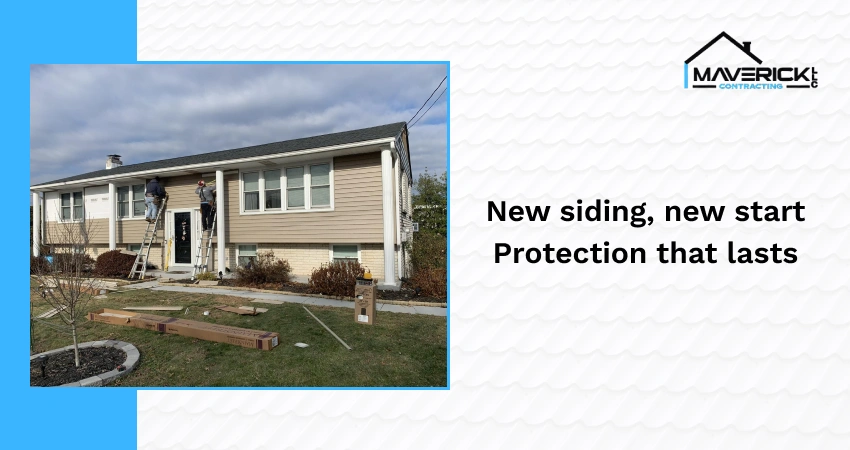
When it comes to siding repair and replacement in Maryland, Delaware, Virginia, and Pennsylvania, Maverick Contracting LLC brings the experience and credentials to handle the job right, from the first inspection to the final panel.
- Full-service siding installation and repair across Maryland, Delaware, Virginia, and nearby areas.
- MHIC licensed and fully insured, so your project and your home are protected
- Detailed written estimates with no hidden costs.
- Committed to completing every project on time, within budget, and to the highest standard of quality.
- A team that treats your home like their own because that’s the standard they’ve built their reputation on.
Whether you need a focused siding repair or a full siding replacement, Maverick Contracting delivers results built to last. Contact us today to schedule your free estimate.
FAQs
1. How do I know if my siding needs repair or full replacement?
If the damage is limited to a few panels, minor cracks, or isolated areas, siding repair is often enough. However, if you notice widespread warping, rot, moisture intrusion, or recurring problems across multiple sections of your home, siding replacement is usually the better long-term solution. A professional siding contractor can inspect the extent of the damage and recommend the most cost-effective option.
2. Is siding repair cheaper than siding replacement?
Yes, siding repair is generally less expensive because it focuses only on damaged areas rather than the entire exterior. However, if repairs are needed frequently or the damage is extensive, the costs can add up quickly. In many cases, investing in siding replacement may provide better value and longer-lasting protection.
3. Can damaged siding lead to other problems in my home?
Absolutely. Cracked, loose, or deteriorated siding can allow moisture to enter your home’s structure. Over time, this may lead to mold growth, wood rot, insulation damage, and even structural issues. Addressing siding damage early through timely repair or replacement helps prevent more costly repairs in the future.
4. What is the average lifespan of residential siding?
The lifespan depends on the material and maintenance. Vinyl siding typically lasts 20 to 40 years, fiber cement siding can last 50 years or more; and wood siding varies depending on upkeep and environmental conditions. If your siding is approaching the end of its expected lifespan, a siding replacement may be a smarter investment than ongoing repairs.
5. Does new siding increase home value?
Yes, new siding can significantly improve curb appeal and increase a home’s resale value. Buyers often view updated siding as a sign that the property has been well maintained. In addition to improving appearance, modern siding installation can enhance energy efficiency and reduce maintenance requirements, making the home more attractive to potential buyers.